

Spotting a Damaged VIN Plate: Your Essential Guide

Overview
The VIN plate is essential for identifying a vehicle and can be damaged over time due to wear, accidents, or vandalism. It's important to regularly inspect your VIN plate for signs of damage, as ignoring it can lead to legal issues, resale challenges, and insurance complications. If damage is found, consult a professional for validation and repair options. Maintaining your VIN plate through regular checks and protective measures can help safeguard your vehicle's identity and value.
Table of Contents
- Understanding the Importance of a VIN Plate
- Why VIN Plates Can Become Damaged
- Signs of a Damaged VIN Plate
- Visual Inspection
- Use of Tools
- What to Do If You Identify a Damaged VIN Plate
- Assess the Situation
- Contact a Professional
- Reinforcing Your Vehicle’s Identity with Professional VIN Labels
- The Risks of Ignoring a Damaged VIN Plate
- Legal Implications
- Resale Challenges
- Insurance Issues
- How to Properly Maintain Your VIN Plate
- Myths and Misconceptions About VIN Plates
- Myth 1: VIN Plates Cannot Be Damaged
- Myth 2: If the VIN Plate is Damaged, the Car is Unsalvageable
- Myth 3: Only Older Vehicles Have VIN Plate Issues
- Final Thoughts: Protecting Your Investment
Key Takeaways
- VIN Plate Importance: The VIN plate serves as a unique identifier for vehicles, containing essential information about their history and specifications.
- Causes of Damage: VIN plates can suffer damage from wear and tear, accidents, vandalism, or poor manufacturing practices.
- Signs of Damage: Look for scratches, fading, rusted edges, and misalignment when inspecting a VIN plate.
- Professional Assistance: Contact an automotive professional for validation, repair options, and understanding legal implications if you find a damaged VIN plate.
- Legal Risks: Driving with a damaged VIN plate can lead to legal consequences, including fines and vehicle confiscation.
- Maintenance Tips: Regularly inspect your VIN plate, avoid harsh chemicals, and consider protective covers to prolong its life.
- Myth Busting: VIN plates can be damaged regardless of vehicle age, and professional help can often rectify the issues without deeming the vehicle unsalvageable.
When it comes to vehicle identification, the VIN plate is paramount. It serves as a unique identifier for every vehicle, holding vital information about its history and specifications. Alas, just like any other part of a car, VIN plates can become damaged over time, leading to potential issues down the road. In this guide, we’ll dive deep into how to identify a damaged VIN plate, what the implications are, and the importance of professional VIN labels for clarity and security. Let’s get started!
Understanding the Importance of a VIN Plate
The Vehicle Identification Number (VIN) is a 17-character code that provides an array of information, including the manufacturer, country of origin, year of manufacture, and vehicle type. It’s not just a series of letters and numbers; it’s your car's fingerprint. Understanding how to interpret a VIN plate can save you time and money when purchasing a used vehicle or verifying its history.
Why VIN Plates Can Become Damaged
VIN plates can become damaged for several reasons:
- Wear and Tear: Over the years, environmental factors such as corrosion, rust, or exposure to sunlight can fade or erode the VIN plate.
- Accidents: Collision impacts can physically displace or damage the VIN plate, making it unreadable.
- Vandalism: Deliberate attempts to alter or obscure a VIN plate can result in significant damage.
- Poor Manufacturing: Sometimes, a VIN plate may not be attached correctly or may be poorly manufactured, leading to easy damage.
Signs of a Damaged VIN Plate
Identifying a damaged VIN plate involves looking for several key indicators. Here’s what to check:
Visual Inspection
Begin with a thorough visual inspection. Look for:
- Scratches and Cuts: Deep scratches or cuts that obscure the numbers or letters are a red flag.
- Fading: If the plate shows signs of fading or discoloration, it can hinder readability.
- Rusted Edges: Rust can indicate exposure to moisture, which might affect the integrity of the entire plate.
- Alignment & Position: Check if the VIN plate is securely affixed and aligned correctly. A misaligned plate might be a sign of tampering.
Use of Tools
For further scrutiny, utilize the following:
- Magnifying Glass: This can help you read small characters that might not be visible to the naked eye.
- UV Light: Some VIN plates may have features that are only visible under ultraviolet light.
- Dusting Powder: In some cases, applying dusting powder can help reveal etched numbers.
What to Do If You Identify a Damaged VIN Plate
If you observe any signs of a damaged VIN plate, it’s crucial to take immediate action.
Assess the Situation
Determine the extent of the damage. Is it merely superficial, or is it severe enough that the VIN is partially or wholly unreadable?
Contact a Professional
For serious damage, contacting an automotive professional is a must. They have the expertise necessary to guide you through the process, including:
- VIN Validation: Experts can help validate whether the VIN on the plate matches other vehicle identifiers.
- Repair Options: Professionals might suggest alternatives for restoration or replacement of the VIN plate.
- Legal Requirements: Understanding legal implications regarding VIN tampering is essential for compliance.
Reinforcing Your Vehicle’s Identity with Professional VIN Labels
One effective method to prevent issues stemming from damaged VIN plates is the implementation of professional VIN labels. These labels can be custom made to secure the vehicle’s identity and add an extra layer of protection against tampering and damage.
The Risks of Ignoring a Damaged VIN Plate
Ignoring a damaged VIN plate is a gamble that can have significant repercussions.
Legal Implications
Driving a vehicle with a damaged or altered VIN can lead to severe legal consequences. You may face fines or even confiscation of the vehicle if it's determined that you possess a vehicle with a tampered VIN.
Resale Challenges
A vehicle with a damaged VIN plate can be difficult to resell. Buyers often hesitate to purchase a vehicle that lacks a clear identifier, leading to reduced value or inability to sell.
Insurance Issues
Insurance companies may scrutinize claims related to vehicles lacking an intact VIN plate. This could adversely affect your coverage if issues arise later.
How to Properly Maintain Your VIN Plate
Preventive measures can help ensure the longevity and visibility of your VIN plate. Here are some practical tips:
- Regular Inspections: Make it a habit to check your VIN plate regularly for signs of wear or damage.
- Avoid Harsh Chemicals: When cleaning, use mild solutions to prevent the plate from corroding.
- Use Protective Covers: Consider applying protective covers specifically designed for VIN plates to shield them from environmental factors.
- Keep Paperwork Updated: Ensure that your vehicle registration and records reflect any repairs or changes to the VIN plate.
Myths and Misconceptions About VIN Plates
Let’s debunk some common myths surrounding VIN plates and their damage:
Myth 1: VIN Plates Cannot Be Damaged
Contrary to popular belief, VIN plates are susceptible to damage, just like any other part of your vehicle.
Myth 2: If the VIN Plate is Damaged, the Car is Unsalvageable
While a damaged VIN plate is serious, it doesn’t necessarily mean the vehicle is beyond repair. Professional intervention can often resolve the issue.
Myth 3: Only Older Vehicles Have VIN Plate Issues
Damage can occur in vehicles of any age. Regular wear and tear, accidents, and vandalism can affect newer vehicles just as much as older ones.
Final Thoughts: Protecting Your Investment
In conclusion, a damaged VIN plate should not be overlooked. Awareness, proper maintenance, and timely action can help you safeguard your vehicle’s identity and value. While the VIN plate serves as a crucial component of your car's identity, professional VIN labels can enhance its visibility and security. By staying educated and proactive, you can ensure your investment remains a cornerstone of your life. Remember, whether you're looking to buy, sell, or maintain your vehicle, always check that VIN plate!
Frequently Asked Questions
1. What is a VIN plate and why is it important?
2. What are some common reasons for VIN plate damage?
3. How can I identify a damaged VIN plate?
4. What should I do if I find a damaged VIN plate?
5. What are the risks of ignoring a damaged VIN plate?
Glossary
| Term | Meaning |
|---|---|
| VIN Plate | A metal plate displaying the Vehicle Identification Number. |
| VIN | A 17-character code that uniquely identifies a vehicle. |
| Corrosion | Damage caused by chemical reactions with moisture and air. |
| Vandalism | Deliberate destruction or alteration of property, including VIN plates. |
| Visual Inspection | A careful examination to identify visible damage. |
| Magnifying Glass | A tool used to enlarge small text or details for better visibility. |
| UV Light | A light source that reveals hidden features on some VIN plates. |
| Legal Implications | Consequences related to laws governing vehicle identification. |
| Professional VIN Labels | Custom labels designed to enhance VIN visibility and security. |
| Preventive Measures | Actions taken to avoid damage to the VIN plate. |
Linked Product
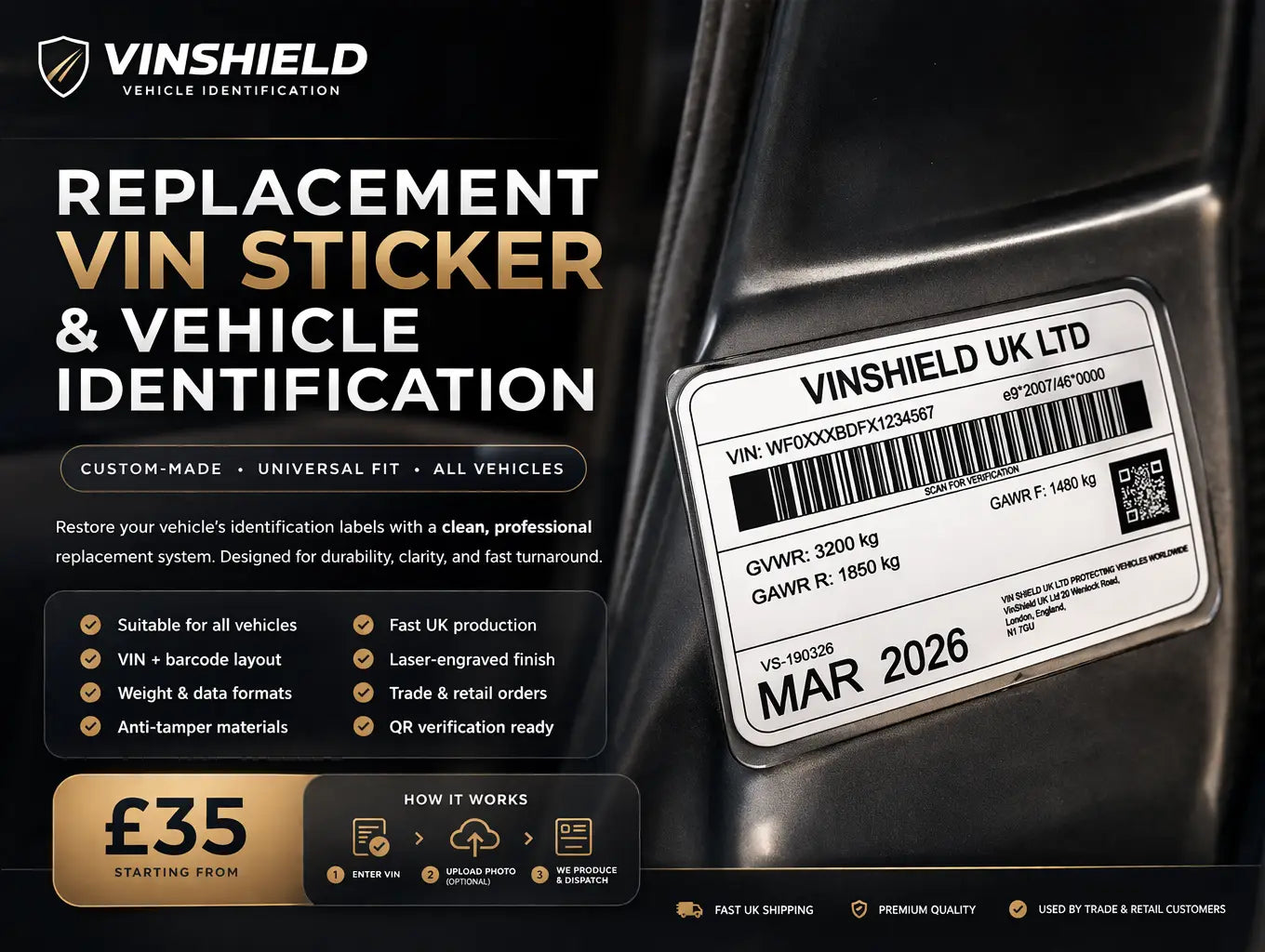
Replacement VIN Sticker & Vehicle Identification Label (All Vehicles)
The Replacement VIN Sticker & Vehicle Identification Label offers a reliable solution for restoring missing or damaged vehicle identification details. Made to order using your specific VIN information, these labels ensure clarity and durability for a variety of vehicle types, including cars, vans, and trailers. With options for additional components like windscreen strips and chassis plates, this product meets the needs of vehicle owners looking to maintain compliance and restore essential identification features.
View Product