

The Importance of State Agencies in VIN Plate Replacement

Overview
The Vehicle Identification Number (VIN) plate is essential for identifying vehicles, containing key information about their make, model, and year. If a VIN plate is damaged, stolen, or lost, a replacement sticker may be needed, which involves a process overseen by state agencies. These agencies verify ownership, inspect vehicles, and maintain records to ensure accurate vehicle identification. Understanding this process is crucial for vehicle owners to navigate potential issues effectively.
Table of Contents
- Understanding the VIN Plate
- Why VIN Plates Need Replacement
- The Role of State Agencies
- Verification of Vehicle Ownership
- Inspection of the Vehicle
- Issuance of Replacement VIN Sticker
- Record Keeping and Compliance
- The Process for Obtaining a Replacement VIN Sticker
- Step 1: Gather Required Documentation
- Step 2: Visit the Appropriate State Agency
- Step 3: Complete an Application
- Step 4: Undergo Vehicle Inspection (if required)
- Step 5: Pay Applicable Fees
- Step 6: Receive Your Replacement VIN Sticker
- Understanding the Impact of Replacement VIN Stickers
- Mitigating Vehicle Theft
- Ensuring Accurate History Records
- Aiding in Legal Matters
- Final Thoughts: Your Key to Vehicle Integrity
Key Takeaways
- VIN Importance: The Vehicle Identification Number (VIN) plate is essential for identifying and registering vehicles, containing critical details about the vehicle's make, model, and year.
- Reasons for Replacement: VIN plates may need replacement due to damage, theft, accidents, or manufacturing errors.
- State Agency Role: State agencies oversee the VIN replacement process, ensuring proper verification of vehicle ownership and conducting necessary inspections.
- Document Preparation: Vehicle owners must gather required documentation, including proof of identity and ownership, to facilitate the replacement process.
- Application Process: Owners must complete an application for a replacement VIN sticker, detailing the vehicle's information and the reason for the replacement.
- Fee Payment: States typically charge a fee for processing the replacement application, which varies based on jurisdiction and circumstances.
- Impact on Vehicle Integrity: A replacement VIN sticker enhances vehicle identification, aids in theft prevention, and ensures accurate vehicle history records.
The Vehicle Identification Number (VIN) plate serves a crucial purpose in the life cycle of a vehicle. It contains a unique identifier that includes essential information about the vehicle's make, model, year, and country of manufacture. However, there are instances where the VIN plate may become damaged, stolen, or lost, leading to the need for a replacement VIN sticker. In such cases, state agencies play a vital role in overseeing and facilitating the replacement process. This article delves into the responsibilities of state agencies in VIN plate replacement and why understanding this process is key for vehicle owners.
Understanding the VIN Plate
A VIN plate is not just a random set of characters; it is a critical component in the identification and registration of vehicles. Every VIN consists of 17 characters (numbers and letters) that provide information regarding:
- The manufacturer: The first three characters identify the company responsible for manufacturing the vehicle.
- Vehicle type: Characters four to eight describe the type of vehicle and its features.
- Check digit: The ninth character acts as a check digit to detect errors in the VIN.
- Model year: The tenth character specifies the model year of the vehicle.
- Assembly plant: The eleventh character indicates where the vehicle was finished.
- Sequential production number: Characters 12 through 17 record the production number.
Given the importance of each of these details, maintaining the integrity of the VIN plate is crucial for establishing ownership and ensuring that vehicles are correctly registered with the state.
Why VIN Plates Need Replacement
There are several circumstances under which a replacement VIN sticker may be necessary. Some common scenarios include:
- Damage or Wear: Exposure to harsh conditions may result in the fading or damage of the VIN plate, making it unreadable.
- Theft: In unfortunate cases of theft, the VIN plate may be removed or altered, necessitating a proper replacement.
- Accidents: Collisions can lead to physical damage to the vehicle and, consequently, the VIN plate.
- Errors: Mistakes made during the manufacturing process could lead to incorrect VINs being issued.
Regardless of the reason, it's essential to go through the proper channels to obtain a replacement VIN sticker. This is where state agencies play an integral role.
The Role of State Agencies
State agencies are responsible for regulating and overseeing the processes associated with vehicle registration and identification, including VIN plate replacement. Each state has its own set of regulations and procedures, but there are several common functions that these agencies serve:
Verification of Vehicle Ownership
Before issuing a replacement VIN sticker, state agencies must ensure that the individual requesting the replacement is the rightful owner of the vehicle. This process often includes verifying the identity of the vehicle owner and confirming ownership through documentation such as title and registration papers.
Inspection of the Vehicle
Many states require a physical inspection of the vehicle to ensure that it accurately matches the records in the state database. This can involve checking other identifying marks on the vehicle, such as the engine number or chassis number. State agents are tasked with conducting these inspections to prevent fraudulent claims.
Issuance of Replacement VIN Sticker
Once the verification process is complete, and any necessary inspections have been conducted, state agencies are authorized to issue a replacement VIN sticker. This sticker should meet specific standards and specifications set forth by the agency to ensure consistency and reliability.
Record Keeping and Compliance
State agencies maintain records of all VIN plate replacements issued, which helps to uphold accurate vehicle identification data. This record-keeping is vital for tracking vehicles, identifying stolen vehicles, and ensuring compliance with vehicle laws. Should a dispute arise regarding vehicle ownership or history, these records serve as vital evidence.
The Process for Obtaining a Replacement VIN Sticker
Understanding the steps involved in obtaining a replacement VIN sticker can help streamline the process for vehicle owners. Here’s a general overview of what to expect:
Step 1: Gather Required Documentation
Vehicle owners should prepare the necessary documentation, which typically includes:
- Proof of identity (e.g., driver's license)
- Proof of vehicle ownership (e.g., vehicle title or registration)
- Any previous paperwork regarding the VIN plate
Having these documents ready will expedite the process of getting a replacement VIN sticker.
Step 2: Visit the Appropriate State Agency
Vehicle owners will need to visit their local Department of Motor Vehicles (DMV) or equivalent state agency. Depending on the state, there may also be online options available to initiate some aspects of the process.
Step 3: Complete an Application
Owners will often need to complete an application for a replacement VIN sticker. This application may ask for the vehicle’s details, including its make, model, and year, as well as the circumstances surrounding the need for a replacement.
Step 4: Undergo Vehicle Inspection (if required)
If mandated by the state, the vehicle will be inspected to verify that the submitted information matches the vehicle's condition and its records.
Step 5: Pay Applicable Fees
States often charge a fee for processing the replacement VIN sticker application. These fees can vary based on the state and specific circumstances, so it’s essential to check in advance.
Step 6: Receive Your Replacement VIN Sticker
Once all steps are complete and the application is approved, the vehicle owner will receive their replacement VIN sticker. It is crucial to place this sticker in the designated area on the vehicle to ensure compliance with regulations.
Understanding the Impact of Replacement VIN Stickers
The issuance of a replacement VIN sticker is not just a bureaucratic procedure; it has significant implications for vehicle identification, crime prevention, and legal ownership. Here are various aspects of its impact:
Mitigating Vehicle Theft
When a replacement VIN sticker is issued, it acts as a safeguard against vehicle theft. It provides law enforcement agencies with verifiable identification, helping them return stolen vehicles to their owners. Notably, having an updated and accurate VIN is crucial for any law enforcement investigation.
Ensuring Accurate History Records
Accurate VIN records are essential for maintaining a reliable history of the vehicle. This history plays a critical role in used car sales, as prospective buyers rely on this information to make informed decisions. Transparency in vehicle history helps build trust between buyers and sellers.
Aiding in Legal Matters
In cases of accidents, disputes, or theft, having a legally recognized VIN can streamline the resolution process. Courts and legal authorities often rely on the verifiable data associated with VINs, making it essential to maintain correct and updated VIN records.
Final Thoughts: Your Key to Vehicle Integrity
State agencies play an indispensable role in the replacement VIN sticker process, ensuring the integrity and reliability of vehicle identification. From verifying ownership to maintaining detailed records, they help uphold a seamless system that benefits vehicle owners and law enforcement alike. Understanding this process empowers vehicle owners, providing them with the knowledge needed to navigate any issues that may arise regarding their vehicle's VIN. So, the next time you find yourself needing a replacement VIN sticker, remember the vital roles that state agencies serve in supporting your vehicle ownership experience.
Frequently Asked Questions
1. What is a Vehicle Identification Number (VIN) plate?
2. Why might I need a replacement VIN sticker?
3. What role do state agencies play in the VIN plate replacement process?
4. What steps should I follow to obtain a replacement VIN sticker?
5. What are the implications of having an accurate VIN?
Glossary
| Term | Meaning |
|---|---|
| VIN | Vehicle Identification Number; a unique code for vehicle identification. |
| VIN Plate | A metal plate displaying the VIN and other vehicle details. |
| Replacement VIN Sticker | A new sticker issued to replace a lost or damaged VIN plate. |
| State Agencies | Government bodies responsible for vehicle registration and VIN management. |
| Vehicle Inspection | A check to ensure the vehicle matches its records and specifications. |
| Proof of Ownership | Documentation confirming the individual is the rightful owner of the vehicle. |
| Check Digit | The ninth character in a VIN used to validate the number. |
| Model Year | The tenth character in a VIN indicating the vehicle's production year. |
| Fees | Charges associated with processing a replacement VIN sticker application. |
| Record Keeping | The practice of maintaining accurate records of vehicle identification. |
Linked Product
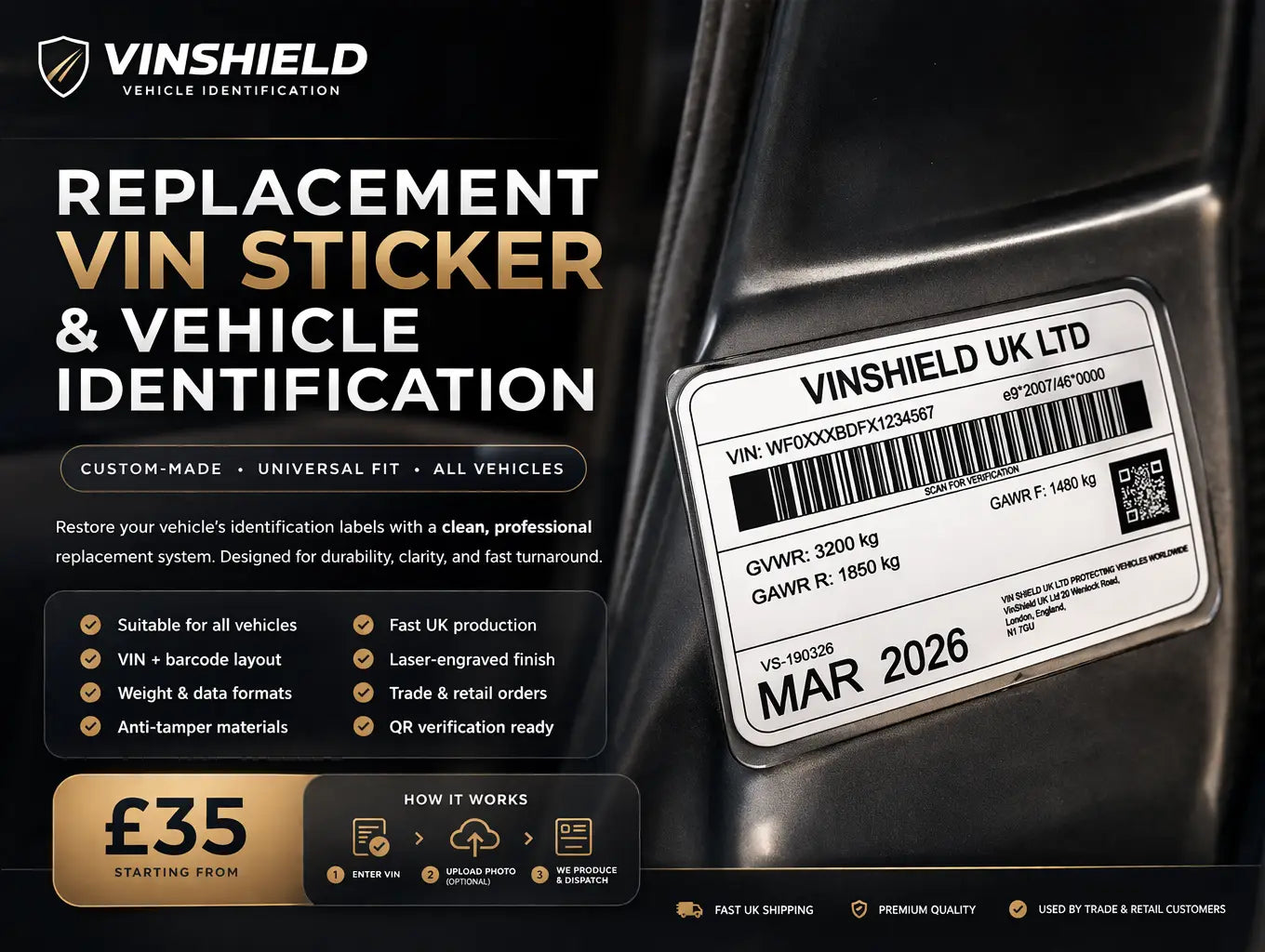
Replacement VIN Sticker & Vehicle Identification Label (All Vehicles)
The Replacement VIN Sticker & Vehicle Identification Label is designed to restore essential identification labels for various vehicles, including cars, vans, and trailers. Ideal for situations involving missing, damaged, or faded VIN stickers, the custom-made labels ensure clarity and durability, accurately reflecting your vehicle's identification details. With options for different types of labels and a quick production turnaround, this solution meets the needs of vehicle owners requiring reliable identification replacements.
View Product