

The Difference Between VIN Plates and Other ID Plates

Overview
VIN plates are essential for vehicle identification, providing unique identifiers that prevent fraud and ensure compliance with regulations. They consist of 17 characters detailing the vehicle's history and specifications. Other identification plates serve different purposes, such as manufacturer identification and safety compliance. Understanding these differences is crucial for vehicle owners and those involved in registration and insurance. Accurate VINs are vital for insurance coverage, resale value, and legal compliance.
Table of Contents
- What is a VIN Plate?
- The Anatomy of a VIN Plate
- World Manufacturer Identifier (WMI)
- Vehicle Descriptor Section (VDS)
- Vehicle Identifier Section (VIS)
- What Are Other Identification Plates?
- Comparing VIN Plates and Other Identification Plates
- Purpose and Functionality
- Legality and Regulations
- Production and Installation
- Understanding Custom VIN Labels
- The Importance of Accurate VIN and Identification Plates
- Common Misconceptions About VIN and Other Identification Plates
- VINs Don’t Matter If You Are Buying a New Vehicle
- All VINs Are the Same
- Identification Plates Can Be Easily Changed
- How to Properly Handle Identification Plates
- The Future of Vehicle Identification
- Your Key Takeaway!
Key Takeaways
- VIN plates are unique identifiers: Each vehicle has a VIN plate that provides a distinct code for identification, preventing fraud.
- Legal significance: VINs are required for vehicle registration and must conform to strict regulations to ensure authenticity.
- Components of a VIN: A VIN consists of 17 characters that convey details about the vehicle, including the manufacturer and model year.
- Comparison with other plates: Other identification plates, like manufacturer's and compliance plates, serve different but complementary purposes.
- Custom VIN labels: These can aid in vehicle restoration, fleet management, and theft recovery, offering additional identification options.
- Importance of accuracy: Accurate VINs are crucial for insurance claims, resale value, and legal compliance.
- Common misconceptions: Myths about VINs, such as their irrelevance for new vehicles or the ease of changing them, can lead to confusion.
When it comes to identifying vehicles, a variety of plates serve distinct purposes. Among them, VIN plates hold a vital position in vehicle identification. Understanding the differences between VIN plates and other identification plates is essential not only for car enthusiasts but also for individuals involved in vehicle registration, insurance, and repairs. In this comprehensive guide, we will explore the intricacies of VIN plates, including their function, legal significance, and how they compare to custom VIN labels and other identification systems.
What is a VIN Plate?
The Vehicle Identification Number (VIN) plate is a unique code assigned to each vehicle manufactured for sale in the United States and many other countries. This plate serves multiple purposes:
- Identification: The VIN plate provides a unique identifier for each vehicle, preventing fraud and ensuring that buyers can verify the vehicle's history.
- Registration: Government agencies require VINs for vehicle registration, making it easier to track ownership and maintain accurate records.
- Safety Compliance: The VIN also helps enforce safety regulations, allowing authorities to track recalls and safety notices.
The Anatomy of a VIN Plate
A VIN plate comprises 17 characters, a combination of both letters and numbers. These characters provide key details about the vehicle, such as its manufacturer, model year, vehicle type, and place of manufacture. Understanding what these characters represent can empower vehicle owners with knowledge about their investment. Here’s a quick breakdown of what each section of a VIN typically signifies:
World Manufacturer Identifier (WMI)
The first three characters of the VIN represent the WMI, indicating the nation and manufacturer of the vehicle. For example, "1HG" might represent a Honda manufactured in the USA.
Vehicle Descriptor Section (VDS)
The next six characters provide information about the vehicle model, body style, engine type, and other features.
Vehicle Identifier Section (VIS)
The last eight characters serve as a unique identifier for each individual vehicle, which includes the production number and model year.
What Are Other Identification Plates?
Identification plates other than VIN plates also exist but serve different purposes:
- Manufacturer's Plate: This identifies the manufacturer of the vehicle and is generally affixed by the automaker.
- Weights and Measures Plate: Found on larger vehicles, this plate indicates the maximum weight capacity and recommendation for tire pressure.
- Compliance Plate: This plate shows compliance with safety standards, including emissions regulations set by various bodies.
Comparing VIN Plates and Other Identification Plates
While VIN plates have a specific goal of uniquely identifying a vehicle, other identification plates play complementary roles. Here’s how they stack up against one another:
Purpose and Functionality
The primary purpose of a VIN plate is to provide a permanent and unique identifier for the vehicle. In contrast, other plates serve to convey essential information regarding safety, compliance, and vehicle specifications. Therefore, the information on a VIN plate is legally mandated and must be consistent across official documentation.
Legality and Regulations
VIN plates must conform to stringent regulations set by governments to prevent counterfeiting and fraud. This legal requirement ensures that the VIN is accurately recorded in vehicle history reports, aiding in various processes like resale, registration, and insurance claims. Other identification plates may not be subject to the same rigorous regulations, though they remain important for vehicle operation and safety compliance.
Production and Installation
The VIN plate is permanently affixed to the vehicle at the time of manufacturing. It often resides in a clearly designated area, typically visible through the windshield. Other identification plates can vary widely in their design and placement. For instance, compliance plates can often be found in a user’s manual or on the vehicle’s door jamb.
Understanding Custom VIN Labels
As we delve deeper into vehicle identification, it’s essential to discuss custom VIN labels and their applications. A custom VIN label can be incredibly useful in various situations:
- Vehicle Restoration: For car enthusiasts restoring classic vehicles, custom VIN labels can be invaluable in recreating factory specifications.
- Fleet Management: Businesses managing fleets of vehicles may utilize custom VIN labels to streamline their inventory and maintain records.
- Theft Recovery: Custom VIN labels may also be employed as a deterrent against vehicle theft, providing a quick means of identification in case of illegal possession.
The Importance of Accurate VIN and Identification Plates
Having accurate identification plates, specifically the VIN plate, is paramount for several reasons:
- Insurance Coverage: Insurance companies require accurate VINs to process claims and provide coverage effectively.
- Vehicle Resale Value: A verified VIN improves the vehicle’s resale value since it adds credibility and ensures that the vehicle's history is transparent.
- Legality: In many jurisdictions, driving a car without an accurate VIN plate can lead to legal complications, fines, or penalties.
Common Misconceptions About VIN and Other Identification Plates
Various myths and misconceptions surround VINs and identification plates that can lead to confusion. Let’s tackle some of these:
VINs Don’t Matter If You Are Buying a New Vehicle
This is a widespread misconception. Whether the vehicle is new or used, the VIN is crucial for verifying its identity and checking for outstanding recalls.
All VINs Are the Same
A common belief is that VINs are standardized. In reality, every VIN is unique to that specific vehicle, and even slight alterations can have significant implications.
Identification Plates Can Be Easily Changed
While some may think that changing VIN plates is a straightforward process, doing so legally is complex and often associated with criminal activity.
How to Properly Handle Identification Plates
Given the importance and sensitivity surrounding identification plates, here are some tips for proper handling:
- Check Regularly: Regularly inspect your VIN plate and other identification plates to ensure they remain intact and legible.
- Consult Experts: If you think your vehicle's identification plates have been tampered with or are missing, consult a professional or legal expert.
- Maintain Documentation: Keep accurate records of your vehicle’s purchase, including any custom VIN labels or modifications made.
The Future of Vehicle Identification
As technology evolves, the realm of vehicle identification is also likely to change. Innovations such as digital VINs and enhanced tracking systems could revolutionize how vehicles are registered, tracked, and bought or sold. Custom VIN labels may also evolve, offering advanced features such as embedded technology for better tracking.
Your Key Takeaway!
Understanding the difference between VIN plates and other identification plates is crucial for anyone involved in vehicle ownership, registration, or insurance. The VIN serves as a unique identifier that carries essential legal and historical significance, while other identification plates have additional roles that contribute to vehicle safety and compliance. As you navigate through vehicle identification requirements, remember the importance of accuracy, legality, and the potential role of custom VIN labels. This knowledge not only protects your vehicle investment but also enhances the overall vehicle ownership experience.
Frequently Asked Questions
1. What is a VIN plate?
2. How many characters are in a VIN plate?
3. What are some examples of other identification plates?
4. Why is the VIN important for insurance coverage?
5. What are some common misconceptions about VIN plates?
Glossary
| Term | Meaning |
|---|---|
| VIN Plate | A unique code assigned to each vehicle for identification and registration. |
| WMI | The first three characters of the VIN indicating the manufacturer and country. |
| VDS | The next six characters in the VIN that describe the vehicle's model and features. |
| VIS | The last eight characters of the VIN serving as a unique identifier for the vehicle. |
| Manufacturer's Plate | A plate identifying the vehicle's manufacturer, affixed by the automaker. |
| Compliance Plate | A plate showing adherence to safety and emissions regulations. |
| Custom VIN Label | A personalized label used for vehicle restoration or fleet management. |
| Vehicle Registration | The official process of recording a vehicle's ownership with the government. |
| Fraud Prevention | Measures taken to avoid deception in vehicle identification and ownership. |
| Vehicle History Report | A document detailing a vehicle's ownership, accidents, and repairs. |
Linked Product
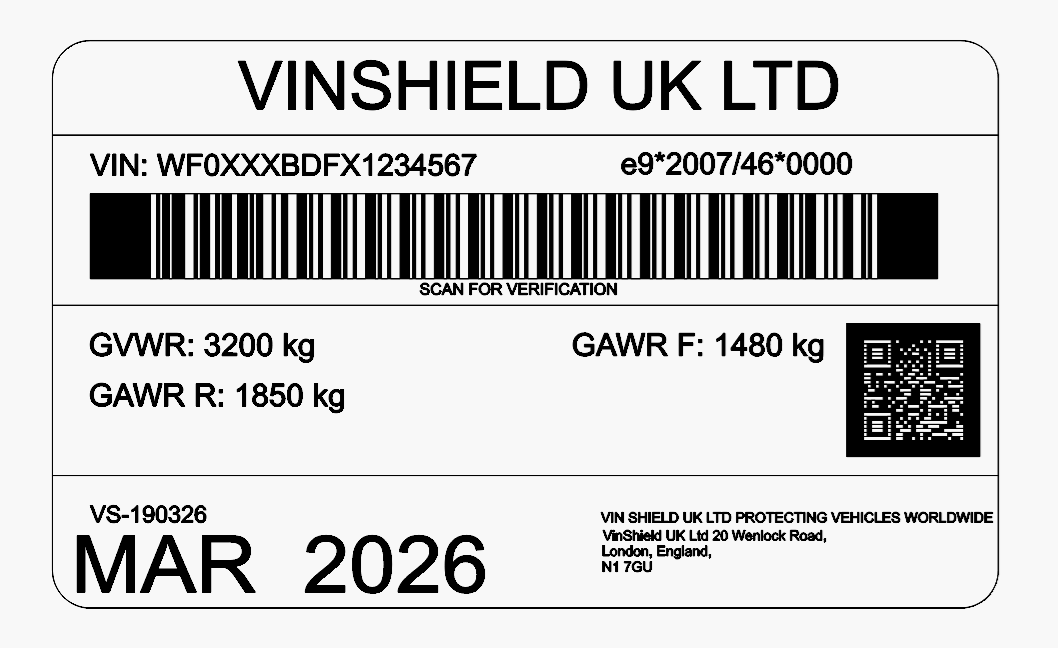
Replacement VIN Sticker & Vehicle Identification Label (All Vehicles)
The Replacement VIN Sticker & Vehicle Identification Label is designed to restore your vehicle's identification details with a custom-made, durable label. Ideal for vehicles with missing, damaged, or faded VIN stickers, it ensures clarity and compliance with a professional layout. Each label is produced using your specific vehicle information, making it suitable for a variety of applications, including cars, vans, imports, and trailers.
View Product